

Sudden and unfair termination of employment is an extremely stressful phase when you already have several liabilities to deal with. Fortunately, in California, employees who are fired wrongfully can benefit from unemployment claims. Familiarity with your rights and legal actions helps support your financial condition until you transition to a new job.
However, not every terminated individual qualifies to take advantage of unemployment insurance, and thus, it’s vital to understand the eligibility criteria for claiming benefits. Keep reading to educate yourself on everything from insights into wrongful termination to understanding whether you get unemployment if you get fired or not.
Insights into California Unemployment Eligibility RulesWrongful termination in California may involve discrimination, retaliation, or violations of employment laws, but unemployment benefits depend on EDD eligibility requirements. Applicants must meet wage criteria, remain available for suitable work, and complete required certifications. Claimants may need to register with CalJOBS and meet deadlines. Benefit amounts depend on earnings during the base period, with a waiting week before payments begin. Legal guidance can help address disputes, denials, and employment rights. |
What is wrongful termination?
One mandatory requirement for receiving unemployment compensation is that you must have been wrongfully terminated. However, unemployment after wrongful termination involves a separate legal question: whether your employer fired you for an unlawful reason.
Wrongful termination is when an employee is fired illegally, and the employee is not at fault. Here are some of the examples of wrongful termination:
- The termination was a part of the discrimination being done by the employer.
- The termination was not in compliance with federal or state labor law.
- It was an unfair consequence of an employee opposing, reporting, or refusing to tolerate the harassment.
- Due to the denial of performing something illegal or something that compromises the safety of any kind.
- The violation of the termination policies of an organization is also considered wrongful termination.
If you have been unfairly fired for these reasons, you can file for unemployment benefits. However, if, as an employee, you broke the company policies, were involved in misconduct, or did any other unacceptable activity, it won’t be counted as wrongful termination, making you ineligible for the benefits.
The California Civil Rights Department’s Employment Discrimination guidance explains protections against workplace discrimination and retaliation, including protections that may apply when an employee is terminated.
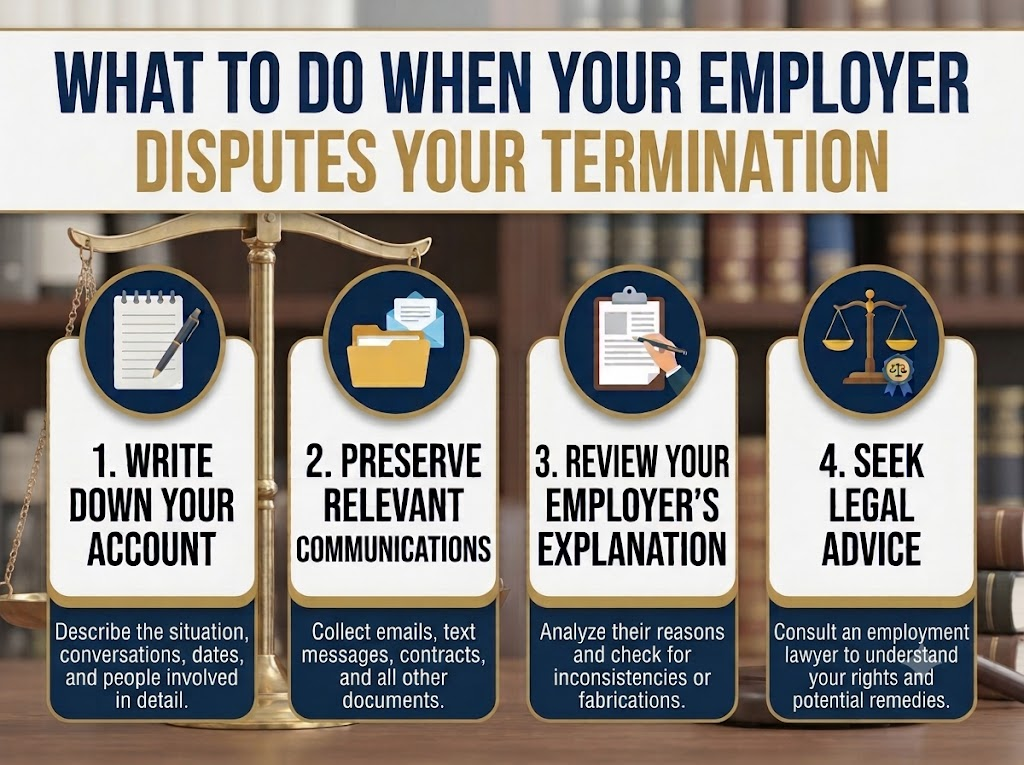
How to Respond When Your Employer Challenges Your Termination
When your employer challenges your account of why your employment ended, knowing how to protect your position can make the next steps clearer. These practical actions can help you prepare for questions about your termination and communicate your circumstances accurately.
How Does Unemployment Compensation Work in California?
California Employment Development Department (EDD) manages everything involved in regulating and enforcing unemployment compensation. The firm also decides whether or not someone qualifies for Unemployment Insurance (UI). Here are some requirements that individuals filing a claim must meet:
- The concerned person must have already earned enough wages during the base period.
- The employee is partially or completely unemployed before applying.
- There has been no fault of the employee in the termination.
- Prepared to take on new roles and responsibilities, the individual is ready for immediate employment opportunities.
- The person is mentally and physically able to work and is available to be hired.
If all these requirements are fulfilled, EDD will allow you to take benefits following a wrongful termination.
Because eligibility depends on your individual circumstances, review the EDD’s official unemployment eligibility requirements to understand how your employment history and reason for termination may affect your claim.
|
Facing a denied unemployment claim or an employer disputing your termination? We offer legal guidance to help you understand your rights and pursue appropriate remedies. |
Filing a Claim
To apply for unemployment benefits in California, follow these steps to complete certification, report your employment status, and meet registration requirements.
- Apply for Certification: Submit your unemployment claim certification online, by phone, or by fax/mail.
- Provide Required Information: Answer questions about your previous employment, wages, and other details to establish your eligibility for benefit payments.
- Renew Certification Every Two Weeks: Recertify every fortnight to confirm that you remain unemployed and eligible for unemployment benefits.
- Register for CalJOBS: If required, register with CalJOBS and create an online resume so potential employers can view your qualifications.
- Meet the Registration Deadline: Complete the CalJOBS registration within 21 days of receiving the Notice of Requirement to Register for Work (DE 8405). Failure to meet this deadline may result in delayed payments or loss of benefits.
The Payment Criteria
Once approved, you will receive about $40 to $450 in weekly benefits (WBA). The exact amount depends on the base wages you earned during your employment. In the highest quarter of your Base Period, you should have earned $1,300. Additionally, your highest quarter earnings must be $900, with total base period earnings amounting to 1.25 times your high quarter earnings. The Base Period spans 12 months, divided into four quarters, each lasting three months. Two options exist for establishing a claim: the Standard Base Period and the Alternate Base Period.
You can calculate the accurate allowance on EDD’s official website. A one-week unpaid waiting period has to be served before you start receiving UI payment.
Conclusion
Losing your job should not mean facing your employer’s decisions without support. At Accident Defenders, our California employment attorneys stand up for workers facing unlawful termination, workplace discrimination, and retaliation. Helping you understand the relationship between termination and unemployment, our team helps you distinguish unemployment benefit eligibility from potential legal claims against an employer. We take the time to understand your circumstances and help you explore the legal options available for your situation. Reach out to our team and take the next step toward protecting your rights and pursuing accountability.
|
Get help navigating unemployment claim complications, denied applications, or delayed payments. Contact our legal team to discuss your rights and explore your options. |
Frequently Asked Questions: Unemployment Allowance For Wrongful Termination
1. Can I collect unemployment compensation if terminated while on disability?
If you are already getting benefits for disability under disability Insurance (DI), you are ineligible to receive the perks under UI. Also, if you are unable to work due to your disability, you might not qualify for UI, as it requires the person to be able to work and available to be hired immediately.
2. Which Evidence Can Support a Wrongful Termination Claim in California?
Relevant evidence includes emails, performance reviews, termination notices, witness statements, and records that may indicate discrimination, retaliation, or other unlawful employment practices.
3. Will Filing a Wrongful Termination Lawsuit Affect Your Unemployment Benefits?
Not automatically. You may pursue an employment lawsuit while receiving unemployment benefits, provided you independently meet EDD’s eligibility requirements and accurately report requested information.
4. Can an Employer Challenge Your Unemployment Claim After Firing You?
Yes. Your employer may dispute your claim, but California’s EDD reviews the available evidence and determines whether you qualify for unemployment benefits.
5. What Steps Should You Take After an Unemployment Claim Denial in California?
Review your denial notice, gather supporting documents, and submit a written appeal within 30 days of the notice’s mailing date.