

Every worker deserves a safe and healthy workplace. Federal and state laws protect employees who report unsafe conditions, participate in safety inspections, or raise concerns about workplace violations. These protections are intended to prevent retaliation, yet some employers may still respond with reduced hours, demotions, unfair treatment, or even termination. If this has happened to you, understanding your workplace safety rights is important. In this guide, we’ll explain the protections available to workers, what counts as retaliation, and the steps you can take to protect your rights and seek legal help.
Workplace Safety Rights: Key PointsWorkers have the right to a hazard-free workplace, safety information, OSHA inspections, protective equipment, and protection from retaliation when reporting safety concerns. Federal and state whistleblower laws safeguard employees from unfair treatment, including termination, demotion, or constructive discharge. Understanding filing deadlines, preserving evidence, and reviewing severance agreements carefully is essential. Legal guidance can help recover lost wages, protect rights, and pursue accountability after workplace retaliation. |
What Are Your Rights for a Safe Workplace?
Right to a Hazard-Free Workplace
Under the OSH Act of 1970, employers must remove known dangers that could cause death or serious injury. This includes things like unguarded machines, poor air quality, or unsafe scaffolding setups.
Right to Information About Workplace Hazards
Employers must train workers in a language they understand, keep records of workplace injuries, and give employees safety information sheets for any dangerous chemicals they might work with. This way, workers always know what risks they could face on the job.
Right to Request an OSHA Inspection
Workers can ask OSHA to inspect their workplace if they think there’s a serious safety problem. You can file this request online, by phone, or by mail, and you can ask OSHA to keep your name private so your employer won’t know who reported it.
Right to Personal Protective Equipment (PPE)
OSHA requires employers to check for workplace hazards and give workers safety gear, like gloves, goggles, hard hats, or respirators, for free. The only exceptions are usually everyday shoes and prescription glasses, which workers typically pay for themselves.
Right to Refuse Unsafe Work
Workers have the right to refuse a task if they reasonably believe it poses an immediate risk of serious injury or death, there is not enough time to address the hazard through normal safety procedures, and they have already asked their employer to correct the dangerous condition, but the issue remains unresolved, according to OSHA guidelines.
Protection After Reporting Safety Concerns
Protection From Retaliatory Actions
Once you report a safety problem, protections under employee rights law help shield you from retaliation. Section 11(c) of the OSH Act stops employers from committing workplace retaliation against workers who report safety problems or take part in OSHA investigations. This includes firing, demotion, pay cuts, or threats. If this happens, workers may get their jobs back, lost pay, and damages.
State-Level Whistleblower Protections
States often provide stronger whistleblower protections than federal law. California’s Labor Code Section 1102.5 protects employees who report suspected legal violations or refuse to participate in illegal activities. Depending on the state, workers may also have the right to sue for retaliation, recover lost wages, and seek additional legal remedies beyond OSHA protections.
Protection Against Constructive Discharge
Sometimes an employer makes work so unpleasant on purpose, through harassment, demotion, or unfair treatment, that an employee feels forced to quit after reporting a safety issue. Even though the employee resigned, the law treats this the same as being fired illegally.
Protection During the Investigation Process
While OSHA looks into a complaint, which usually takes a few months, the employer can’t punish the worker any further. This means no extra discipline, schedule changes, or close monitoring connected to the original report, and they must keep related records safe.
When to Seek Legal Help for Workplace Retaliation?
You’re Approaching the 30-Day OSHA Filing Deadline
You must file a Section 11(c) complaint within 30 days of the retaliation. Missing this deadline can mean losing your case completely, so talk to a lawyer right away.
Your Employer Offers a Severance Agreement With a Release Clause
Severance agreements often require employees to give up their right to sue their employer in exchange for compensation. In some cases, the payment offered may be only a few weeks’ pay. Signing the agreement without fully understanding its terms could mean losing the opportunity to pursue a much larger legal claim, so it is wise to have a lawyer review the offer before accepting it.
You’ve Lost Wages, Been Demoted, or Been Fired
If you’ve lost money because of retaliation, like less overtime, a pay cut, or losing your job, a lawyer can figure out how much you’re owed, including any workers’ compensation benefits you may be entitled to, and help collect proof, like pay stubs, performance reviews, and statements from coworkers, to support your case.
OSHA Dismissed Your Section 11(c) Complaint
If OSHA decides there’s no case, or 210 days pass without a decision, you usually can’t take your case to federal court under Section 11(c). Even if your OSHA complaint or related workers’ compensation claim is denied, you might still be able to sue under your state’s own whistleblower law, and in this endeavour, legal help comes in handy.
You Need Help Preserving Time-Sensitive Evidence
Emails, texts, and internal notes can get deleted or changed within weeks of an incident. Getting legal help early means a lawyer can send your employer a ‘legal hold’ letter, a formal request that forces them to keep all records related to your case before they disappear.
|
If you’ve been injured at work, protect your benefits and legal rights with experienced guidance from our Los Angeles workers’ compensation attorneys! |
Mistakes To Avoid After Workplace Retaliation
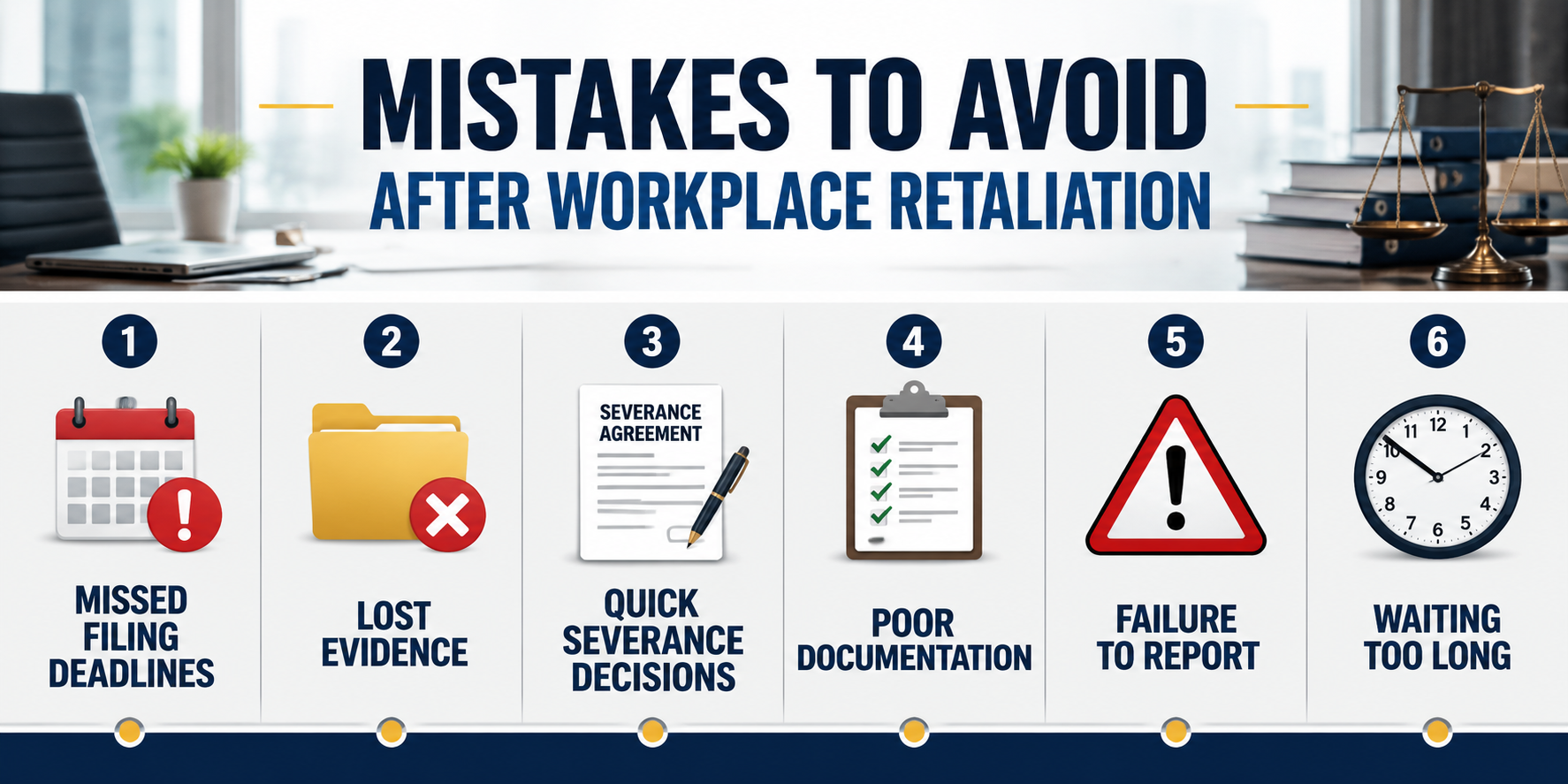
After facing workplace retaliation, the steps you take next carry real weight. A few common mistakes, made without realizing it, can quietly weaken your case before you’ve even had the chance to build it properly.
Conclusion
Filing deadlines come up fast, and severance offers often aren’t worth what you actually deserve. Accident Defenders’ lawyers can look at your case, figure out exactly what you’re owed, and gather the proof needed to hold your employer responsible for the harm caused. Whether you’ve been fired, demoted, or pressured to resign after reporting a safety issue, the right legal guidance early on can protect your future.
| Your job, your income, your rights, don’t fight for them alone. Contact Accident Defenders today for your free consultation! |
FAQ’s About Workplace Retaliation
1. Does retaliation have to be immediate to count as illegal?
No, retaliation can happen weeks or even months after you report a safety issue and still be illegal. What matters is showing a clear link, like getting a bad review right after years of good ones.
2. Is there a cost to file an OSHA retaliation complaint?
No, filing a complaint with OSHA doesn’t cost anything. You don’t need a lawyer to file it, but having one can help make your case stronger and improve your chances of winning.
3. What happens if my employer settles with OSHA instead of fighting the case?
OSHA can approve a settlement between you and your employer at any point. This might mean getting back pay or your job back, settling the case without going through a full court trial.
4. Can social media posts about safety lead to retaliation?
It depends. If your post is about unsafe conditions and connects to working together with coworkers, it might be protected under a different law called the National Labor Relations Act, not just OSHA.
5. Can temporary or contract workers file a retaliation complaint?
Yes. OSHA’s protections cover temporary, part-time, and contract workers too, not just full-time employees, as long as you faced retaliation for reporting a safety issue.