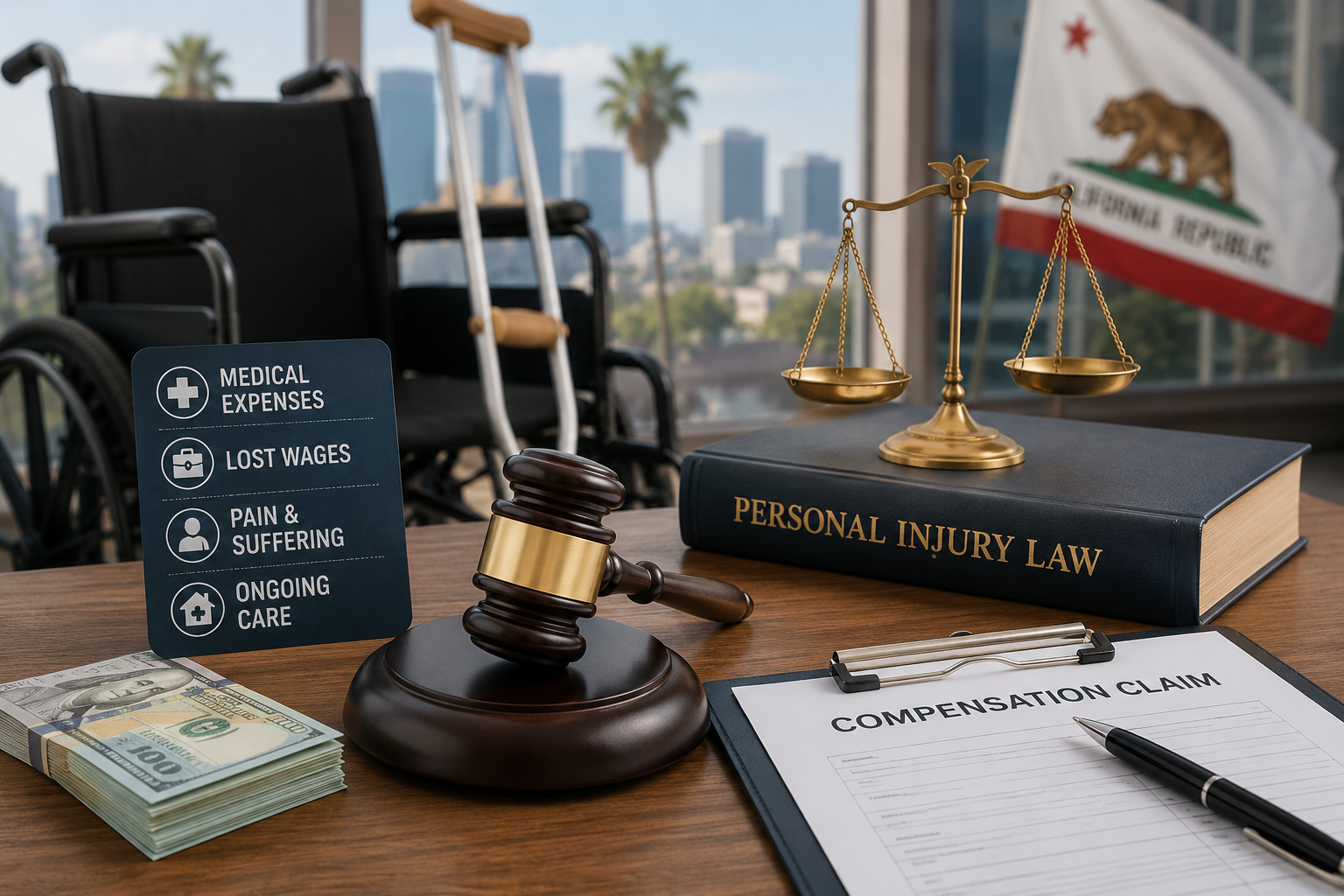

A warehouse worker hurts his back lifting inventory. A delivery driver gets hit by another car while making a route. A nurse slips on a wet hospital floor. In each of these situations, the question of workers compensation versus personal injury can shape how medical bills get paid, whether lost wages are covered, and who can be held accountable.
This is where many injured people get misled. Employers, insurance carriers, and adjusters often act like there is only one lane for recovery. That is not always true. In California, the difference between a workers’ compensation claim and a personal injury case matters, and in some situations, an injured person may have the right to pursue both.
Workers compensation versus personal injury: the basic difference
The simplest way to understand workers compensation versus personal injury is this: workers’ compensation is usually tied to job-related injuries, while personal injury claims are generally based on someone else’s negligence causing harm. They can overlap, but they are not the same thing.
Workers’ compensation is a no-fault system. If you were hurt in the course of your job, you usually do not have to prove your employer was careless. In exchange, you generally cannot sue your employer for ordinary negligence. The trade-off is straightforward – easier access to certain benefits, but narrower damages.
A personal injury claim is different. You typically must prove another party acted negligently or wrongfully and that their conduct caused your injuries. If you can prove that, the potential recovery is broader. You may be able to recover not just medical costs and lost income, but also pain and suffering and other damages that workers’ compensation does not pay.
That difference is not minor. It often affects the total value of a case by a wide margin.
What workers’ compensation usually covers
If you are injured at work in California, workers’ compensation may provide medical treatment, temporary disability benefits while you cannot work, permanent disability benefits if you do not fully recover, and supplemental benefits in some cases. If a worker dies from a job-related injury, death benefits may also be available to dependents.
For many injured employees, that system is the first line of protection. It can help keep treatment going and provide some wage replacement during a financially unstable time. That matters when rent is due, bills are piling up, and you are worried about how long you will be off work.
But workers’ compensation has real limits. It does not award damages for pain and suffering. It does not compensate you for the full human impact of an injury in the same way a personal injury case can. And while the system is supposed to help workers, insurers often delay care, dispute the severity of injuries, or push people back to work too soon.
That is why a claim that sounds simple on paper can turn into a fight fast.
What a personal injury claim can cover
A personal injury case is built around fault and damages. If another person, company, or entity caused your injury, you may seek compensation for medical expenses, lost earnings, future medical care, reduced earning capacity, and pain and suffering. Depending on the facts, other damages may also apply.
This is often the better-known path after a car crash or premises liability accident, but it can also matter when an injury happens during work. The key issue is not just where the injury happened. It is who caused it.
For example, if you are driving for work and another driver crashes into you, your job-related status may make workers’ compensation available. But the at-fault driver may also be responsible through a personal injury claim. If a defective machine injures you on the job, there may be a case against the manufacturer. If an outside contractor creates a dangerous condition at a worksite, that contractor may face liability.
These third-party cases are where injured workers can lose serious money if no one looks beyond the workers’ compensation file.
When you may have both claims
One of the most important parts of workers compensation versus personal injury is understanding that the two are not always either-or.
If you were injured while working, you may have a workers’ compensation claim because the injury arose out of your employment. But if someone other than your employer or coworker caused or contributed to the harm, you may also have a personal injury claim against that third party.
Common examples include vehicle accidents during work duties, construction site injuries involving multiple companies, defective tools or equipment, dangerous property conditions controlled by someone else, and rideshare or delivery-related crashes. In these situations, workers’ compensation may cover immediate benefits, while a personal injury case may pursue the fuller damages the comp system does not provide.
That does not mean every work injury becomes two cases. Sometimes there is only a workers’ compensation claim. Sometimes the facts are disputed. Sometimes a third-party claim exists but the available insurance is limited. It depends on the details, and those details matter early.
Why fault matters in one case and not the other
Workers’ compensation usually does not require proof that your employer did something wrong. That can be a benefit because you do not have to spend months arguing over blame just to get treatment started. If the injury happened in the course of employment, that may be enough to trigger benefits.
A personal injury claim is more demanding. You need evidence. That can include witness statements, photos, medical records, incident reports, vehicle data, safety records, and expert analysis. But that extra burden comes with the possibility of recovering damages that reflect the true impact of what happened.
This is one reason insurance companies prefer injured people to think only in workers’ compensation terms. A narrow claim is easier and cheaper for them to manage.
The employer issue that confuses many people
A lot of injured workers ask the same question: If I got hurt at work, can I sue my employer?
Usually, the answer is no for ordinary negligence because workers’ compensation is generally the exclusive remedy against the employer. That is the system’s built-in bargain. But that does not end the analysis. There can be exceptions in rare situations, and there may be claims against other parties connected to the incident.
There may also be separate employment law issues if an employer retaliates against you for reporting an injury, filing a claim, requesting medical care, or asserting your rights. Being hurt on the job should not cost you your livelihood. If your employer threatens you, cuts your hours unfairly, fires you, or treats you differently because you exercised protected rights, that is a separate legal concern worth taking seriously.
How compensation really differs
The practical difference in workers compensation versus personal injury often comes down to what lands in your pocket and what support you actually receive.
Workers’ compensation can be vital, but wage replacement is usually limited and formulas do not always reflect the full financial damage to a family. Personal injury damages, on the other hand, may account for broader income loss and non-economic harm like pain, emotional distress tied to the physical injury, and long-term disruption to your life.
That does not make personal injury automatically better. A personal injury case may take longer, require stronger proof, and depend on available insurance or assets. Workers’ compensation may provide quicker access to some benefits. The right strategy is often not choosing one over the other, but identifying every valid claim and pursuing them in a way that protects your recovery.
What injured workers should do early
After any serious injury, report what happened, get medical attention, and document everything you can. If the injury happened at work, make sure the work connection is clearly reported. If another person or company may have played a role, preserve that information too. Names, photos, vehicle details, equipment information, and witness contacts can become critical later.
Do not assume the insurance company will explain your options fairly. They are not there to maximize your recovery. They are there to protect the company’s bottom line.
That is why early legal review matters. A good lawyer is not just filing forms. A good lawyer is identifying whether your case belongs only in workers’ compensation, whether a personal injury claim exists too, and whether your employer or insurer is trying to box you into less than you deserve. Firms like Accident Defenders approach these cases with that bigger picture in mind, because injured workers need more than paperwork – they need someone ready to fight.
If you are dealing with pain, missed paychecks, and pressure from employers or insurers, do not let anyone reduce your case to the smallest possible claim. The right path starts with knowing what was taken from you and refusing to leave valid compensation on the table.