
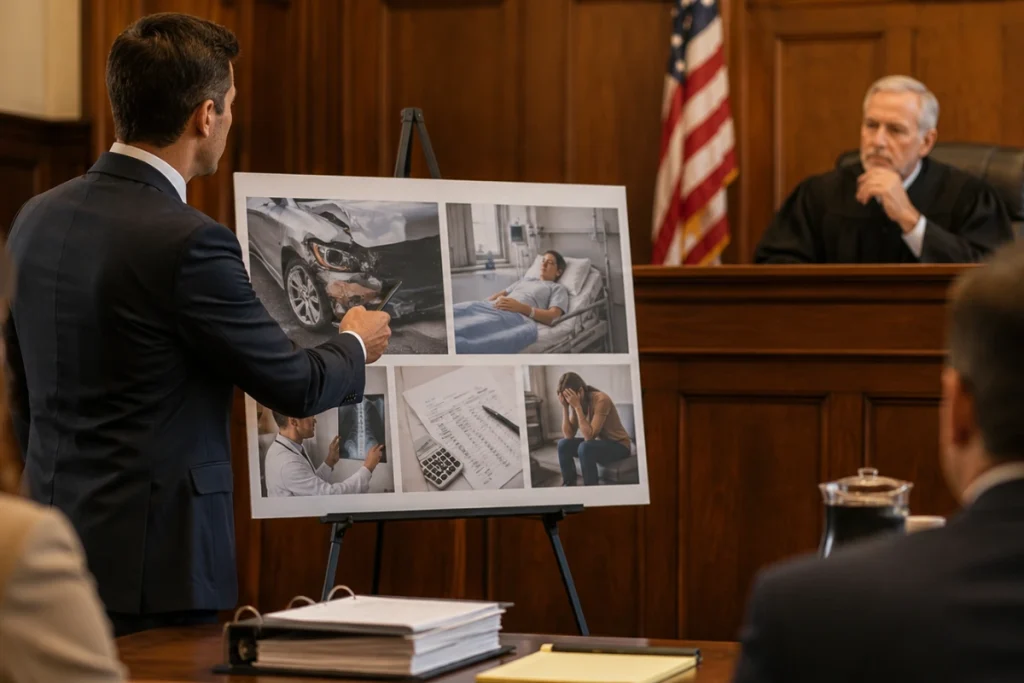
A personal injury can stop your life in its tracks. While you’re still trying to process what happened, insurance companies and opposing parties are already moving against you. This is exactly where a personal injury lawyer becomes not just helpful, but necessary. Personal injury law is complicated, built in a way that naturally favors those who know how it works, and the other side is counting on you not knowing. A good lawyer investigates what you can’t, challenges every lowball offer you wouldn’t know to question, and fights for compensation you wouldn’t know to ask for; all on a contingency fee basis, meaning they only get paid if you win. Here is exactly how they do it all!
Highlights: How Your Lawyer Wins Your Claim
California personal injury law entitles victims to economic, non-economic, and punitive damages when someone else’s negligence causes harm. A personal injury lawyer establishes fault, builds evidence, counters insurance tactics, and presents a complete damage claim before a judge and jury under California’s Civil Jury Instructions (CACI). Who represents you in that process determines whether your compensation reflects your actual losses or the amount an insurance company was comfortable paying.
Understanding What “Damages” Mean & Their Types in Personal Injury Law
Legally speaking, damages mean that you are due financial compensation for any injury caused by someone’s carelessness or willful action on their part. While money cannot erase your experience, it can help relieve some of the burden you bear going forward.
California law recognizes three types of damages:
- Economic damages cover tangible losses: medical bills, lost wages, property repair costs, and future treatment costs. These come with a paper trail, making them easier to document and harder for insurers to dispute.
- Non-economic damages cover everything that doesn’t come with a receipt: chronic pain, emotional distress, loss of enjoyment of life, worsening of pre-existing injuries, and strain on personal relationships. In most California personal injury cases, there is no cap on these.
- Punitive damages are rare, applying only when conduct crosses into deliberate harm or fraud, designed to punish, not just compensate.
What Your Personal Injury Lawyer Actually Does to Win Your Damages in Court
Establishing Negligence & Countering the Other Side
From the moment you file, the defendant is already working to reduce your claim. They’ll question the nature of your injuries, allege a preexisting condition, and push your share of fault higher than it deserves. Your lawyer steps into the courtroom with everything needed to prove all four components that the defendant tries to disprove:
- Duty of Care: There existed a legal duty on the part of the liable party to take care when acting towards you.
- Breach of Duty: This duty was breached through negligence or carelessness.
- Causation: This breach resulted in a foreseeable injury inflicted upon you.
- Damages: You suffered actual, compensable losses under California law as a direct result of their actions.
A personal injury lawyer in Los Angeles who has handled these cases has seen every version of that playbook and walks into the courtroom with a response already built for each one.
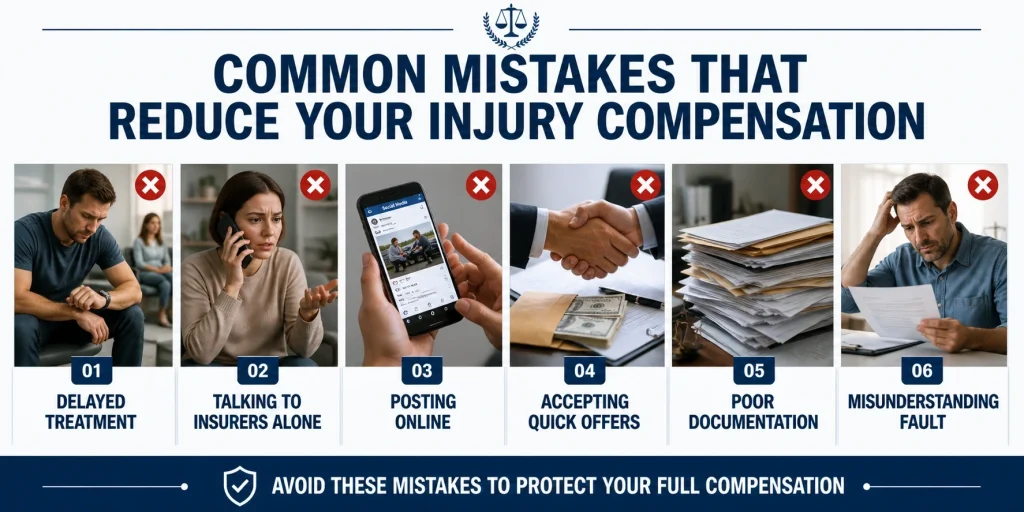
Here is a closer look at mistakes that can cost you your rightly compensation:
Collecting Evidence to Support Damage Claims
Medical records, hospital bills, pay stubs, accident reports, photographs, surveillance footage: every piece of documentation on how the injury has affected you is organized into a hard-to-dismiss case. This is where having an attorney in your corner makes a real difference. They know what insurers look for, what gaps they exploit, and how to close them before the other side gets the chance. If you’re filing a personal injury claim, how thoroughly this stage is handled often determines everything that follows.
Working With Expert Witnesses to Quantify Your Losses
On your own, despite the need for an expert witness, finding and briefing the right one is a process for which most people have no roadmap. Thus, when it comes to needing statements from professionals like doctors, economists, and life care planners, your attorney has the effective access needed. They can actually position their testimony in court with the right know-how. Injury compensation that truly reflects what you’ve been through rarely happens without this step.
Addressing Comparative Fault in Court
California’s pure comparative fault rule recognizes that life is rarely black and white. Even if you were partially at fault for what happened, you can still recover damages, reduced proportionally by your share of responsibility. Your attorney’s job here is to make sure the facts tell your story accurately, because the defense will spend weeks crafting their own version, pushing your fault percentage as high as possible to shrink the payout.
Final Arguments and Damage Summation
By the time closing arguments come around, everything you’ve been through finally gets told as one story, including the mounting bills, the work you couldn’t show up to, and the life that got put on hold. Your attorney takes every economic damage and turns it into something the jury doesn’t just understand but actually feels. That kind of argument isn’t built overnight: it comes from years of standing in that courtroom and knowing exactly what lands.
How the Jury Determines Your Award
Once both sides have had their say, it’s no longer in your attorney’s hands, but everything the jury sees, weighs, and ultimately decides on. In California, jurors are guided by the Civil Jury Instructions (CACI), which walk them through how to weigh the evidence and apply the law to what they’ve heard. And unlike criminal cases, the bar here isn’t “beyond a reasonable doubt.” Jurors simply need to find it more likely than not that the defendant’s negligence caused your harm.
Conclusion
Every step this blog has walked you through only works when the person executing it has done it before and done it well. At Accident Defenders, we have spent years doing exactly that, fighting for injured workers and accident victims. With over 30 years of combined legal experience, we know what it takes to walk into a courtroom prepared and walk out with results.
FAQs
1. How is what my medical bills state different than what is actually recovered through a claim?
California will take into consideration the amount actually paid out, or that which would need to be paid, not the amount originally charged, which will most likely be substantially less.
2. Is there a tax on personal injury damages?
Not typically, although awards for pure emotional distress that are not caused by any physical harm might be subject to taxation.
3. What happens if the defendant does not have adequate insurance to cover my damages?
There are options to recover from your own underinsured motorist insurance, additional at-fault parties, or even the defendant’s personal assets.
4. What if the nature of my injury worsens over time? Are the new damages covered?
Absolutely, any costs of additional treatment, loss of earning capacity, or continuing expenses will be included in your claim from the outset.
5. Is it relevant which county in California the case is brought under?
The courthouse will vary based on where the injury took place or where the defendant resides; however, the laws regarding damages are consistent throughout all of California’s counties.