Right after a crash, people worry about pain, their car, missing work, and whether the insurance company will actually do the right thing. In that chaos, the best evidence after car accident claims is usually gathered in the first minutes, hours, and days. What you collect early can decide whether your case gets taken seriously or pushed aside.
Insurance companies do not pay based on sympathy. They pay based on proof. If liability is disputed, if your injuries are called minor, or if the other driver changes their story, evidence becomes your shield. The stronger the evidence, the harder it is for an insurer to minimize what happened and what it has cost you.
What counts as the best evidence after car accident cases?
The best evidence is not just one photo or one police report. It is a combination of facts that work together. Liability evidence shows how the crash happened. Medical evidence shows what the crash did to your body. Financial evidence shows what the crash has taken from your life.
That is why the strongest claims are built from layers. Scene photos help confirm vehicle positions and damage. Witness statements help support your version of events. Medical records tie your injuries to the collision. Lost wage documents show the financial harm. When all of that lines up, the case becomes much harder to attack.
Evidence from the crash scene matters more than most people realize
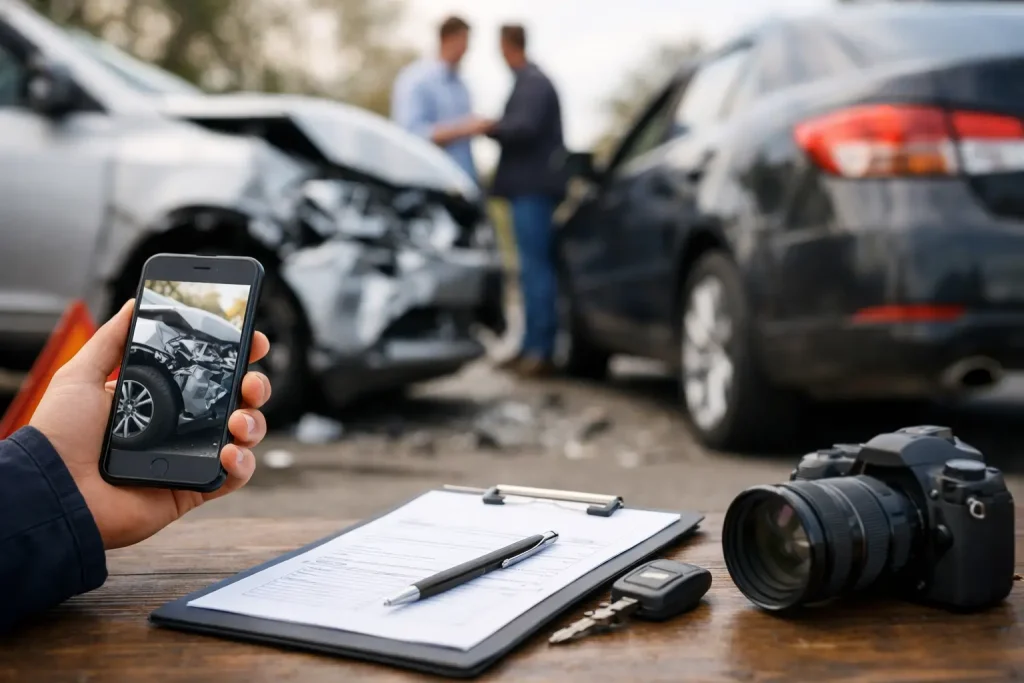
If you are physically able to do it safely, the crash scene is the first place to preserve critical proof. Photos and video often carry more weight than people expect because they capture details before vehicles are moved, debris is cleared, and memories start to fade.
Take wide shots and close-ups. Get the intersection, traffic lights, lane markings, skid marks, broken glass, deployed airbags, damage to all vehicles, and any visible injuries. If weather, glare, road construction, or blocked signs played a role, document that too. A single image of a hidden stop sign or a crushed driver-side door can change how fault is evaluated.
Do not assume the police or insurance adjuster will capture everything for you. They often do not. And once the scene is gone, that opportunity is gone with it.
Witnesses can make or break a disputed case
Independent witnesses are powerful because they usually have no stake in the outcome. If someone saw the crash, ask for their name and contact information. If they are willing, a short recorded statement on your phone can help preserve what they saw while it is still fresh.
This matters most when the other driver lies, softens their conduct, or claims you caused the collision. A neutral witness who says the other driver ran the red light or drifted into your lane can carry enormous weight. Without that witness, the insurer may try to frame the case as your word against theirs.
The police report helps, but it is not the whole case
Many people think the police report is the final word. It is important, but it is only one piece of the puzzle. A report may include driver statements, witness names, diagrams, and the officer’s observations. That can be valuable, especially if the other driver was cited.
But reports are not perfect. Officers may arrive after the impact, rely on limited information, or miss injury details that emerge later. Some reports contain errors. If that happens, strong supporting evidence like photos, witness statements, and medical records becomes even more important.
Treat the report as a useful tool, not a complete substitute for building your case.
Medical records are some of the best evidence after car accident injuries
If you are hurt, get medical care as soon as possible. Delays give insurance companies room to argue that your injuries were not serious or were caused by something else. That argument is common, and it can cost you.
The medical record creates a timeline. It shows when you first reported pain, what symptoms you described, what treatment you needed, and how the injury affected your daily life. Emergency room records, urgent care notes, imaging, specialist evaluations, physical therapy records, and follow-up visits all matter.
Be accurate and consistent with providers. Tell them where you hurt, when it started, and how it affects work, sleep, lifting, driving, or caring for your family. If your records say you are improving while you are telling the insurer you can barely function, that inconsistency will be used against you.
Gaps in treatment can hurt your claim
Life gets in the way. People miss appointments because they are working through pain, watching their kids, or worried about cost. That is understandable. But from an insurance company perspective, a long treatment gap often becomes a weapon. They may argue you were not really injured or that you recovered quickly.
If you cannot continue treatment, document why. Maybe you lost income, your provider stopped seeing you, or transportation became difficult. Those facts matter. A legal team can often help connect the dots before the insurer uses them to devalue the case.
Your phone, receipts, and work records tell the financial story
A crash claim is not only about fault and diagnosis. It is also about losses. Keep every document connected to the collision, including towing bills, repair estimates, rental car costs, prescription receipts, mileage to medical appointments, and invoices for out-of-pocket care.
If you missed work, save pay stubs, timesheets, direct deposit records, and any note from your employer confirming missed hours, light-duty restrictions, or reduced earnings. For many working adults in California, lost income is one of the biggest sources of stress after a wreck. It should be documented with the same care as the medical side of the case.
If your injuries limit overtime, side jobs, physical labor, or future earning ability, that can matter too. The real value of a claim often comes from how the injury disrupts your actual life, not just the first hospital bill.
Digital evidence is growing, and it can be decisive
Modern crashes leave digital footprints. Dashcam video, business surveillance footage, traffic cameras, rideshare app records, vehicle data, and cell phone records can all become relevant. In some cases, this is the strongest proof available.
But digital evidence disappears fast. Surveillance systems overwrite footage. Apps change records. Vehicles get repaired or totaled before data is preserved. That is one reason early legal action can matter. A lawyer can move quickly to identify and preserve evidence before it vanishes.
This is especially true in truck crashes, rideshare collisions, and serious injury cases where the defense has a head start. The other side may already be building its file while you are still trying to get your car out of the shop.
What not to do if you want to protect your evidence
Some mistakes do not look serious in the moment, but they can do real damage later. Do not repair your car immediately if the damage itself may help prove the force and angle of impact. Do not throw away damaged personal items. Do not post casually on social media about being fine, back at the gym, or taking a trip if your injuries are still under review.
And be careful with recorded statements to the insurance company. They may sound routine, but the questions are often designed to lock you into facts before you understand your injuries or the legal issues. If you guess, minimize symptoms, or speak carelessly, that recording may come back months later when money is on the line.
Why strong evidence changes settlement value
A weak case invites delay, denial, and low offers. A well-documented case does the opposite. It shows the insurer that if they refuse to be fair, there is proof ready to support a serious demand or lawsuit.
That leverage matters. Insurance companies are businesses. They calculate risk. When fault is clear, injuries are documented, and losses are backed by records, it becomes harder for them to hide behind uncertainty. That does not guarantee a quick resolution, because every case has trade-offs and some injuries take time to fully understand. But strong evidence puts pressure where it belongs.
For injured people who are already dealing with pain, bills, and missed work, that pressure can make a real difference. It can be the difference between being dismissed and being taken seriously.
When to get legal help preserving the best evidence after car accident claims
Not every crash needs a lawyer immediately. But if liability is disputed, injuries are significant, multiple vehicles are involved, or the insurer is already pushing back, waiting can be costly. Evidence fades. Witnesses disappear. Records get harder to collect.
A plaintiff-side firm with insurance defense insight knows where weak points usually appear because it has seen how claims are attacked. That is one reason people turn to firms like Accident Defenders after a serious collision. The job is not just filing paperwork. It is protecting the story of what happened with proof that stands up when the other side starts fighting.
If you are hurt after a crash, think less about saying the perfect thing and more about preserving the facts. The strongest case usually starts with ordinary steps taken early, before the evidence has a chance to disappear.