One bad crash, fall, or workplace incident can change every part of your life in a matter of seconds. If you are asking what qualifies as catastrophic injury, you are probably not dealing with a minor setback. You may be facing surgeries, permanent disability, lost income, and a future that looks nothing like the one you planned.
That distinction matters. A catastrophic injury claim is not just a bigger version of a standard injury case. These cases usually involve lifelong medical care, major financial losses, and hard fights with insurance companies or employers that want to minimize what happened. When the damage is permanent or life-altering, the legal stakes rise fast.
What qualifies as catastrophic injury in California?
In plain terms, a catastrophic injury is a severe injury that causes long-term or permanent damage to a person’s body, brain, or ability to work and live independently. The label is not always about one specific diagnosis. It is usually about the extent of the harm and how deeply it affects daily life.
A broken bone can be painful and serious, but it may heal fully. By contrast, a spinal cord injury that leaves someone with partial paralysis, or a traumatic brain injury that changes memory, personality, and concentration, is far more likely to qualify as catastrophic. The same is true for severe burns, amputations, loss of vision, organ damage, and injuries that require extensive rehabilitation or lifelong assistance.
California cases often focus on practical consequences. Can the injured person return to work? Will they need future surgeries, home modifications, mobility devices, or in-home care? Has the injury permanently limited their independence, movement, speech, cognition, or ability to enjoy life? Those answers often shape whether an injury is treated as catastrophic.
Common injuries that may qualify as catastrophic
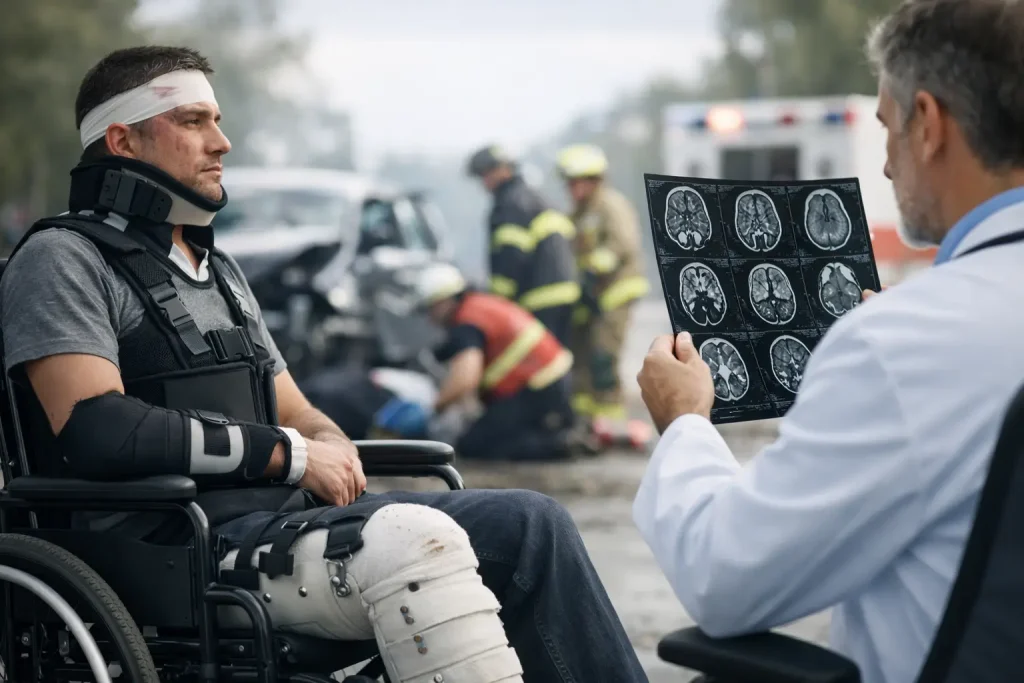
Some injuries are more likely than others to meet the standard. Traumatic brain injuries are a major example, especially when they lead to cognitive problems, mood changes, headaches, sensory issues, or a reduced ability to function at work and at home. These injuries can be especially difficult because the damage is not always visible, but the life impact is very real.
Spinal cord injuries are another clear category. Partial or complete paralysis, chronic nerve pain, loss of sensation, and serious mobility limitations often support a catastrophic injury claim. The same goes for amputations, whether caused by a vehicle collision, machinery accident, or another violent event.
Severe burn injuries may also qualify, particularly when they involve nerve damage, infection risk, disfigurement, repeated surgeries, or long-term trauma. Injuries causing blindness, hearing loss, major facial trauma, or permanent internal damage can also fall into this category.
That said, there is no magic list. Two people can suffer the same type of injury and have very different outcomes. One may recover enough to return to work, while the other may never regain the same level of function. That is why these cases depend heavily on medical evidence and the actual effect on the injured person’s life.
The real test is how the injury changes your life
When people hear the phrase catastrophic injury, they often picture only the most extreme scenarios. But legally, the issue is broader. The key question is whether the injury has caused permanent, serious impairment with major consequences.
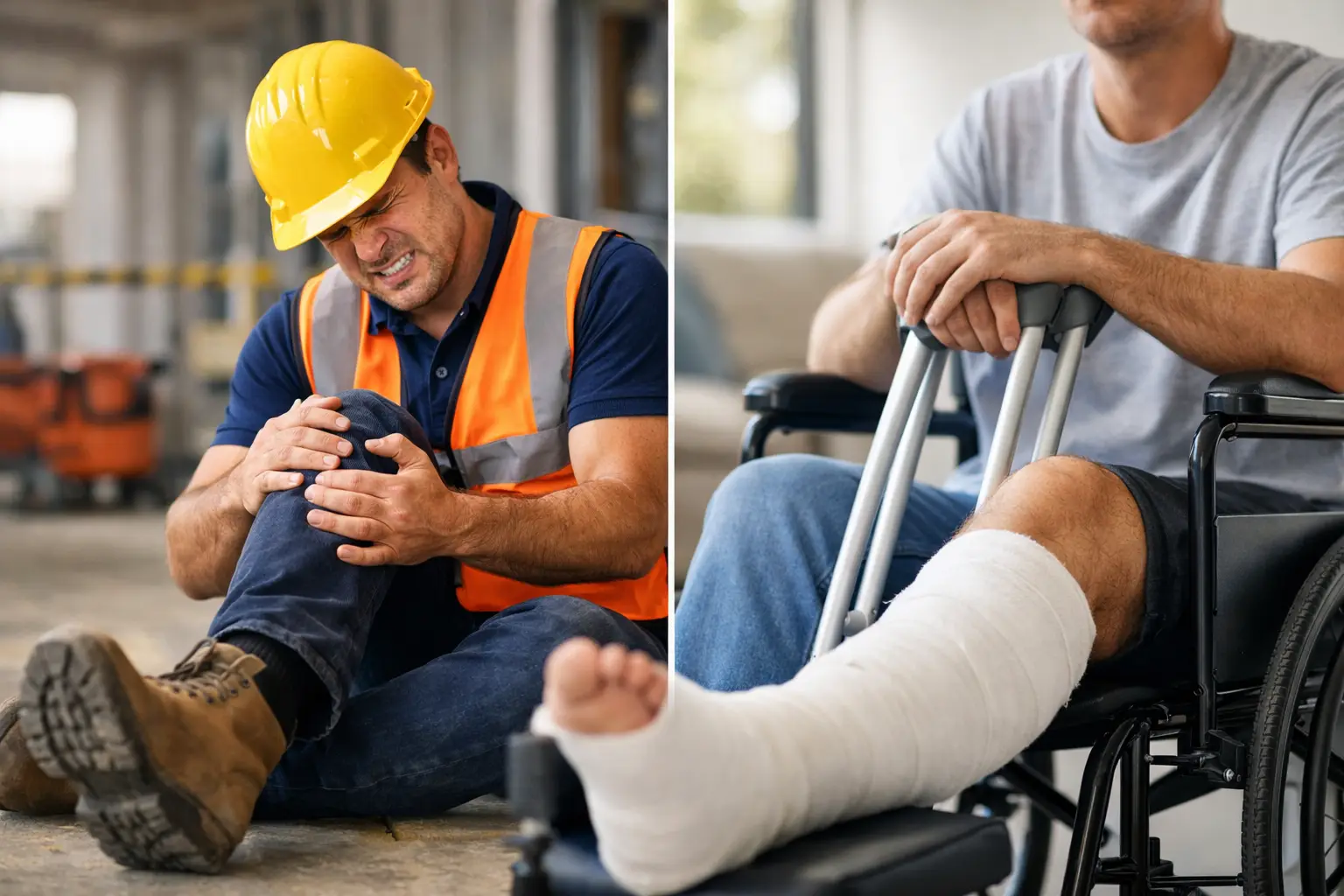
That can mean a construction worker who can no longer lift, climb, or safely perform physical labor. It can mean an office employee whose brain injury makes concentration and memory unreliable. It can mean a parent who now needs help getting dressed, driving, or caring for their children.
Insurance companies know this, and they also know how to argue around it. They may admit you were hurt but insist you will recover more than your doctors expect. They may point to a short surveillance clip, a selective medical review, or a preexisting condition and try to cut down the value of your claim. In catastrophic cases, those tactics can cost injured people enormous amounts of money over time.
Why catastrophic injury cases are different
A catastrophic injury case usually involves much more than current medical bills. It may include future treatment, physical therapy, assistive devices, pain management, home health support, lost earning capacity, and major non-economic harm such as pain, emotional distress, and loss of enjoyment of life.
That future component is where these cases often become hard-fought. If someone is 35 years old and can no longer return to their trade, the financial impact may stretch across decades. If they need ongoing treatment or supervision, the claim must account for those costs before a settlement is signed. Once a case ends, there is usually no second chance to ask for more because the injury turned out worse than the insurer predicted.
This is also why quick settlement offers can be dangerous. Early offers may sound substantial when bills are piling up and paychecks have stopped. But if the injury is truly catastrophic, a fast payout may not come close to covering the long-term damage.
What qualifies as catastrophic injury at work?
Workplace cases have their own complications. In workers’ compensation claims, catastrophic injuries often involve crushing incidents, falls from heights, machinery accidents, electrocutions, explosions, repetitive trauma that leads to permanent disability, or violence on the job. Severe brain injuries, spinal injuries, amputations, and extensive burns are common examples.
But workers’ comp does not always fully reflect the human cost of a catastrophic injury. It may provide medical care and disability benefits, but it does not offer the same categories of damages available in a personal injury case. That is why it is critical to examine whether a third party may also be responsible, such as a negligent driver, subcontractor, property owner, equipment manufacturer, or another outside entity.
It depends on how the injury happened. A delivery driver struck by another vehicle while working may have both a workers’ comp claim and a third-party personal injury claim. A warehouse employee hurt by defective equipment may also have a product liability case. Those additional claims can make a major difference in the compensation available.
How these injuries are proven
Serious cases are won with evidence, not labels. Saying an injury is catastrophic is not enough by itself. The proof usually starts with medical records, imaging, specialist opinions, surgical reports, and treatment history. From there, the case may also require evidence about future medical needs, work restrictions, and how the injury affects day-to-day life.
Family members can play an important role because they often see the before-and-after reality most clearly. They know whether the injured person can still work, sleep, drive, socialize, or manage basic tasks without help. In severe cases, testimony about personality changes, chronic pain, or loss of independence can be just as important as a diagnosis.
In high-value claims, insurers often bring in experts whose job is to reduce exposure. They may dispute causation, downplay future treatment, or argue that the person can still earn a living in some other role. Strong legal representation matters because these cases are rarely treated fairly on goodwill alone.
When to talk to a lawyer
If you suspect your injury may be catastrophic, do not wait for the insurance company to define it for you. The earlier your case is evaluated, the better your chances of preserving evidence, documenting the full impact, and avoiding a settlement that undervalues what you have lost.
This is especially true if you are being pressured to give statements, accept a payment, return to work before you are ready, or deal with a denied or delayed claim. Catastrophic injury cases demand a serious legal strategy because the people on the other side are usually already building theirs.
At Accident Defenders, we know how insurers and employers defend high-stakes claims, and we know how to push back. When an injury takes away your health, income, or future, you deserve more than sympathy. You deserve a team that will fight for the compensation and justice your case truly demands.
If your life has been permanently altered, trust your instincts. When an injury changes how you work, move, think, or live, the cost is too high to let someone else decide what your future is worth.