

California is an at-will employment state. That means employers can terminate employees at any time and for different reasons. However, that doesn’t give them unlimited power. State and federal laws place clear restrictions on when a termination can be lawful, particularly when discrimination, retaliation, or other unlawful conduct is involved.
And when these legal protections are violated, a termination becomes wrongful even if the employer claims it was permitted under at-will employment. However, unfortunately, many employees are unsure where that line is drawn. This leads to confusion about whether their job loss was legal or actionable.
Understanding the difference between lawful vs wrongful termination is essential to protect your rights in the workplace. This blog talks about the legal differences under California law, to help employees recognize when a termination may cross legal boundaries and when they may have grounds to pursue legal remedies.
Key Insights on Lawful vs Wrongful Termination
Lawful termination occurs when employment ends for valid business reasons, policy violations, or performance issues, following proper procedures and legal standards. Wrongful termination arises from discrimination, retaliation, contract breaches, public policy violations, or improper leave denial. Employees benefit from documenting incidents, understanding statutory protections, and seeking legal guidance to safeguard their rights under California employment laws.
What Is Lawful Termination?
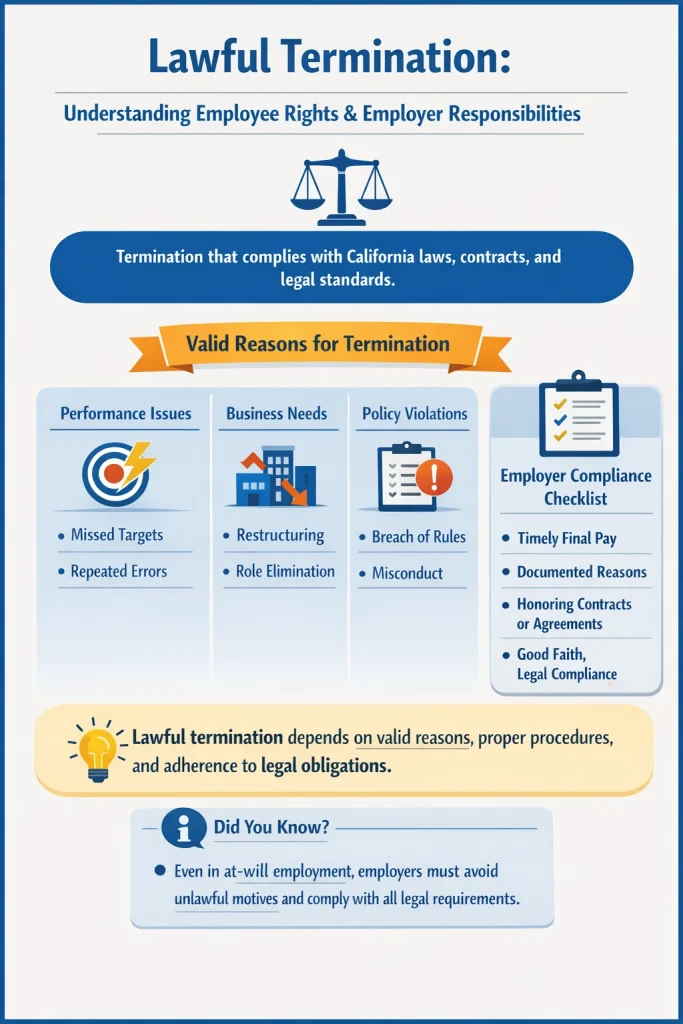
Lawful termination in California occurs when an employer ends employment following the applicable employment laws, contractual obligations, and recognized legal standards. It can be due to business-related reasons such as performance deficiencies, organizational restructuring, economic challenges, or role elimination. It can also take place when an employee violates company policies, fails to meet documented job expectations, or engages in conduct that conflicts with workplace standards.
Employers must also comply with wage and hour requirements, issue final pay within statutory timeframes, and honor written or implied employment agreements.
What Makes a Termination Wrongful Under California Law?
Wrongful termination in California occurs when an employer ends employment by violating the employee’s legally protected rights, statutory obligations, or clearly established public policy. It basically focuses on illegal motive, unlawful conduct, or prohibited consequences, even if the employer cites a seemingly valid reason for the decision.
Let’s discuss when a termination can be considered wrongful under California law:
Sexual Harassment
Termination becomes unlawful when it follows an employee’s report of sexual harassment or refusal to submit to unwanted conduct, protections that are expressly covered under the California Fair Employment and Housing Act (FEHA). California law now protects employees from adverse actions linked to complaints of harassment, whether the harassment is committed by supervisors, coworkers, or third parties. Courts often examine retaliation patterns, such as sudden discipline or termination shortly after a complaint is made.
Hostile Work Environment and Forced Separation
In cases when harassment becomes severe or ongoing enough that it starts to interfere with an employee’s ability to do their job, it’s the legal duty of the employer to address it. And if an employee reports the harassment and is later fired because they made that complaint, the termination again will be considered wrongful.
Another case is when the conditions become so severe that an employee would feel forced to leave, which the law may treat as constructive termination. In this case, the employer can be held legally responsible as if the employee had been directly fired.
Workers’ Compensation Retaliation
California law makes it illegal for an employer to terminate or otherwise punish an employee for filing, pursuing, or testifying in a workers’ compensation claim. If an employee is fired, demoted, or treated unfairly because they reported a workplace injury, required medical treatment, took injury-related leave, or participated in a rehabilitation program, the employer may be held liable under California Labor Code §132a.
Family and Medical Leave Violations
Employees who are eligible for protected leave under FMLA or CFRA cannot be terminated for using those rights. Termination tied to medical leave, caregiving responsibilities, pregnancy-related leave, or military family care may constitute unlawful retaliation, particularly when followed by job denial upon return. Awareness of at-will employment exceptions is critical in these cases.
Whistleblower Retaliation
California has strong laws that protect workers who report suspected wrongdoing in their companies or to government agencies. Labor Code Section 1102.5 says that firing someone after they report safety violations, fraud, harassment, or not following the rules could be against the law, even if it’s not true.
WARN Act Violations
Employers covered under the California WARN Act must provide advance notice before mass layoffs, relocations, or closures. Terminations carried out without proper notice can result in liability for back pay, benefits, and statutory penalties.
Breach of Employment Agreements
Termination that contradicts written, verbal, or implied employment agreements may be wrongful. The courts examine offer letters, handbooks, performance policies, and employer conduct for the actions in making or impliedly denying the enforceable promises.
Violation of Public Policy
Termination that penalizes employees for refusing illegal acts, reporting violations, exercising statutory rights, or fulfilling civic duties constitutes illegal termination. Such actions undermine public policy and may give rise to tort claims and other remedies beyond standard statutory protections.
Failure to Follow Company Policies
When an employer has established disciplinary or termination procedures, such as progressive discipline or formal review steps, employees may reasonably expect those policies to be followed. If an employer ignores its own rules and terminates an employee without following the stated process, it will be considered wrongful termination under California law.
Emerging Protections Against Automated Terminations
California’s proposed regulation of AI-driven employment decisions reflects growing scrutiny over automated terminations. Employers relying solely on algorithmic systems without human review may face future liability if decisions lack transparency, fairness, or legal compliance, highlighting the evolving scope of employment termination laws.
Conclusion
It is very important to carefully document workplace incidents and understand your legal protections to truly defend your rights as an employee. If you ever face unfair or wrongful termination, our wrongful termination lawyers at Accident Defenders can help you. We understand the challenges and stress you may be going through, and we are here to help you steer through the process with clarity and confidence. To know more or to get a free consultation, call us at (323) 591-2829.
FAQs
1. How does California handle illegal termination due to employee complaints?
Termination after raising concerns about safety, wages, or illegal activities may be considered illegal. Employees may seek remedies like back pay, reinstatement, or damages.
2. Are employees protected during company mergers or restructuring?
Employees may have protections under laws requiring advance notice for layoffs, relocations, or closures. Failure to comply may be deemed unlawful termination.
3. What steps should an employee take if they suspect wrongful termination?
Document incidents, follow company policies, and understand legal protections. Consulting an employment attorney can help assess and pursue potential claims.
4. Can employees receive unemployment benefits after a wrongful termination?
Wrongfully terminated employees may qualify for unemployment benefits, depending on the circumstances and legal violations involved.
5. How do employment termination laws in California differ from other states?
California offers stronger protections, including limits on at-will termination, anti-retaliation laws, and broader safeguards for discrimination and leave.